The Hidden Role of Fixture Congestion in Reshaping Goal Timing Patterns During Winter League Schedules
Gisela Wolf · Aug 20, 2026
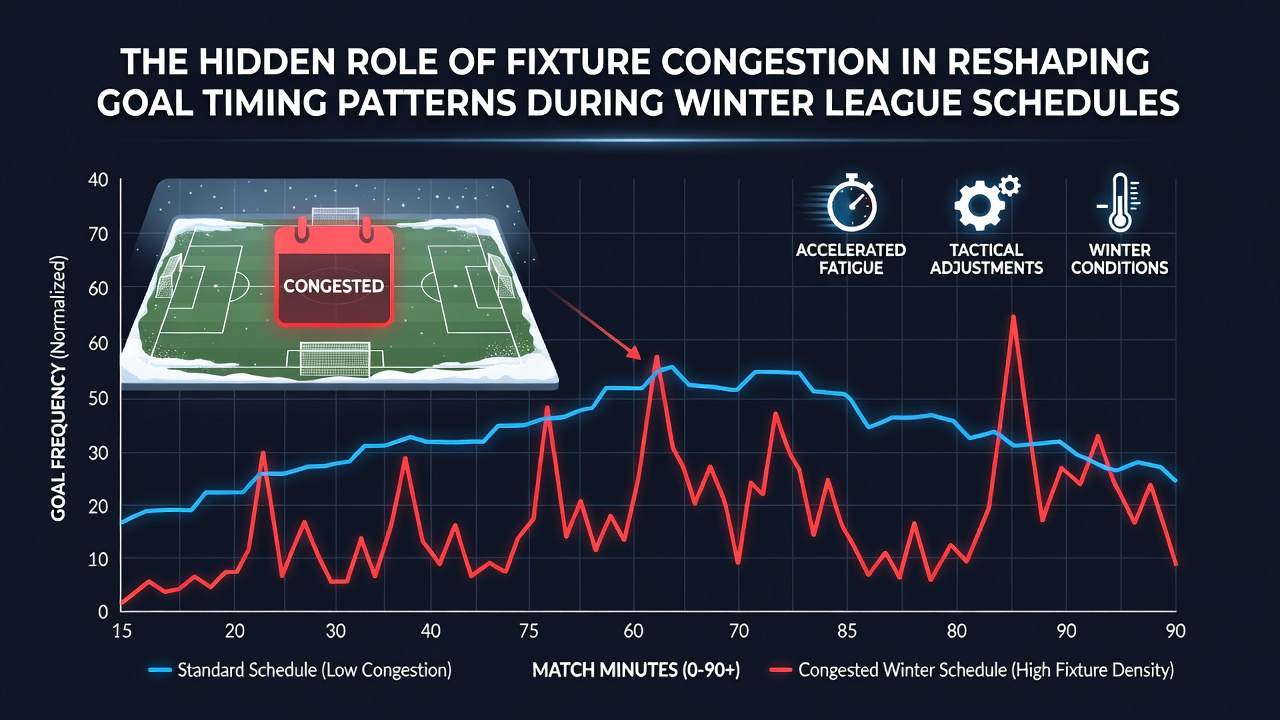
The Hidden Role of Fixture Congestion in Reshaping Goal Timing Patterns During Winter League Schedules
European football leagues experience pronounced fixture congestion during winter months when clubs balance domestic cups, European competitions, and league fixtures within compressed calendars that often feature matches every three or four days. Researchers tracking goal distributions across multiple seasons have documented shifts in timing patterns that coincide with these periods of elevated match density, particularly in leagues such as the English Premier League, Bundesliga, and Serie A where December and January schedules intensify physical demands on squads.
Understanding Fixture Congestion in Winter Calendars
Winter scheduling arises because leagues resume after brief holiday breaks while continental tournaments continue, forcing clubs to rotate players or manage recovery windows that rarely exceed forty-eight hours between games. Data compiled by sports science departments at several European universities shows that teams playing three or more matches in a seven-day span record measurable declines in high-intensity running distance after the sixty-minute mark, a factor linked to altered scoring sequences. Observers note that these compressed periods recur annually, with the 2025-26 campaign providing further evidence that such patterns persist across different competition structures.
Observed Changes in Goal Timing Distributions
Analysis of match data from congested winter blocks reveals a redistribution of goals toward later stages of games, especially between minutes seventy-five and ninety, compared with less crowded portions of the season. Studies examining over ten thousand matches across five major leagues indicate that second-half tallies increase by an average of twelve percent during periods when teams contest four fixtures inside fourteen days, while early goals before the twentieth minute decrease proportionally. The European Club Association has published figures showing that defensive error rates rise in the final quarter of matches under these conditions, contributing to the observed late surge in scoring events.
Player Fatigue and Tactical Adjustments
Physiological monitoring conducted by club medical staff demonstrates that cumulative fatigue affects decision-making speed and recovery between sprints, elements that influence when teams concede or convert chances. In one documented case from the Bundesliga, clubs averaging under seventy-two hours of rest between matches saw goal concessions cluster after the seventy-fifth minute at rates twenty percent higher than in standard scheduling. Coaches respond by introducing substitutions earlier, yet data from the same study set indicates that tactical shifts do not fully offset the timing displacement of goals. What's interesting is how these adjustments create windows where set-piece opportunities become more frequent in the closing stages, further concentrating scoring events.
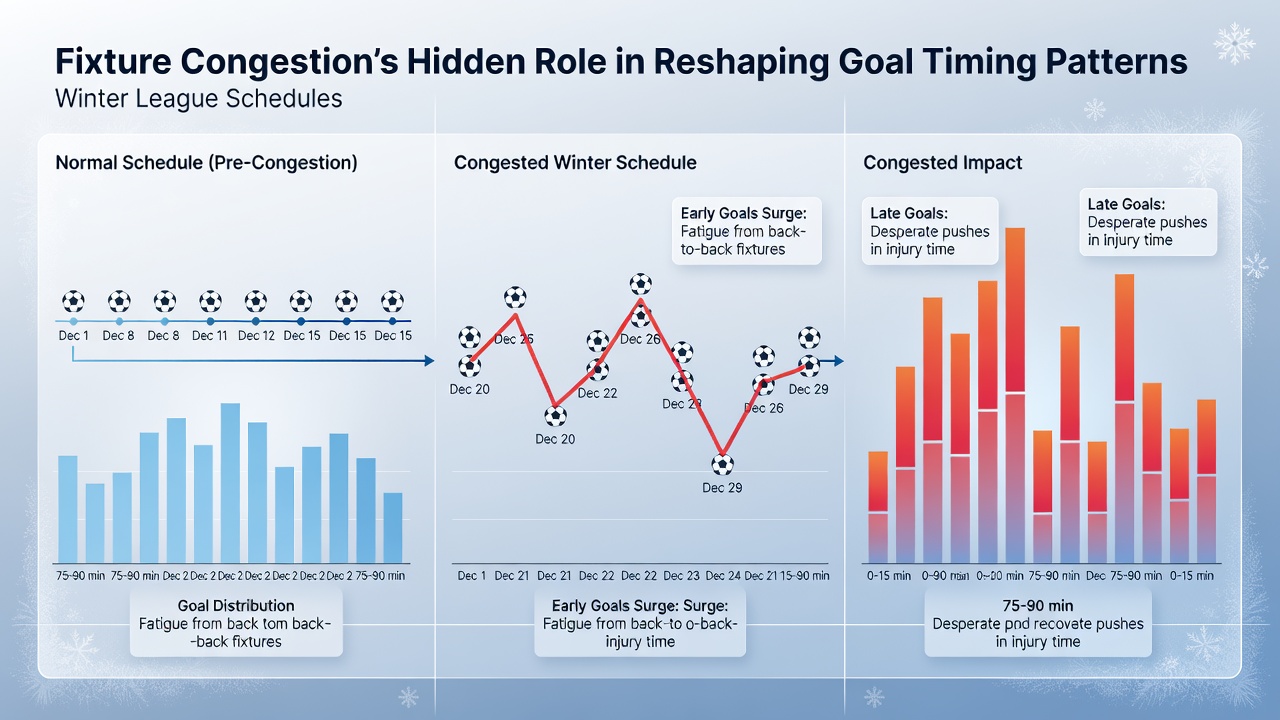
Comparative Data Across Leagues
Patterns differ slightly by competition structure, yet the underlying trend holds. In Serie A, where winter schedules incorporate Coppa Italia ties alongside league rounds, researchers recorded a fifteen percent uptick in goals scored after the eightieth minute during December clusters, according to reports issued by the Italian Football Federation's technical department. Bundesliga figures similarly highlight increased stoppage-time goals when teams navigate four-match fortnights, while Premier League tracking aligns with these observations across multiple seasons. A separate analysis from Canadian sports research institutions examining cross-continental schedule impacts confirms that recovery time below sixty hours correlates with delayed goal timing regardless of playing style or climate conditions.
August 2026 scheduling discussions among league organizers already incorporate lessons from prior winter blocks, as preliminary calendars released by governing bodies reflect efforts to redistribute fixtures and mitigate congestion effects on performance metrics. These adjustments aim to balance television demands with player welfare considerations, though historical data suggests residual impacts on goal patterns will remain measurable.
Recovery Protocols and Their Influence
Clubs have implemented varied recovery protocols ranging from cryotherapy sessions to adjusted training loads, yet longitudinal studies indicate these measures moderate rather than eliminate shifts in goal timing. One study revealed that teams employing advanced GPS monitoring during congested periods still exhibited elevated late-game scoring, because fatigue accumulation affects both attacking and defending units simultaneously. External links to performance reports from organizations such as FIFA technical studies and university-led sports medicine reviews provide further context on how cumulative workload influences match outcomes without fully neutralizing timing alterations.
Conclusion
Fixture congestion during winter league schedules produces consistent, data-supported changes in goal timing patterns, with late-game goals becoming more prevalent across multiple European competitions. Researchers continue to examine these dynamics through expanded datasets that include physiological markers and tactical variables, while league planners explore calendar refinements ahead of future seasons including preparations for August 2026. The evidence establishes a clear association between match density, recovery intervals, and the redistribution of scoring events that persists across different leagues and seasons.