Powerplay Collapses in T20 World Cup Group Stages Sparking Over Rate Bets in Subsequent Innings Based on Bowler Economy Patterns
Ellis Washington · Nov 13, 2026
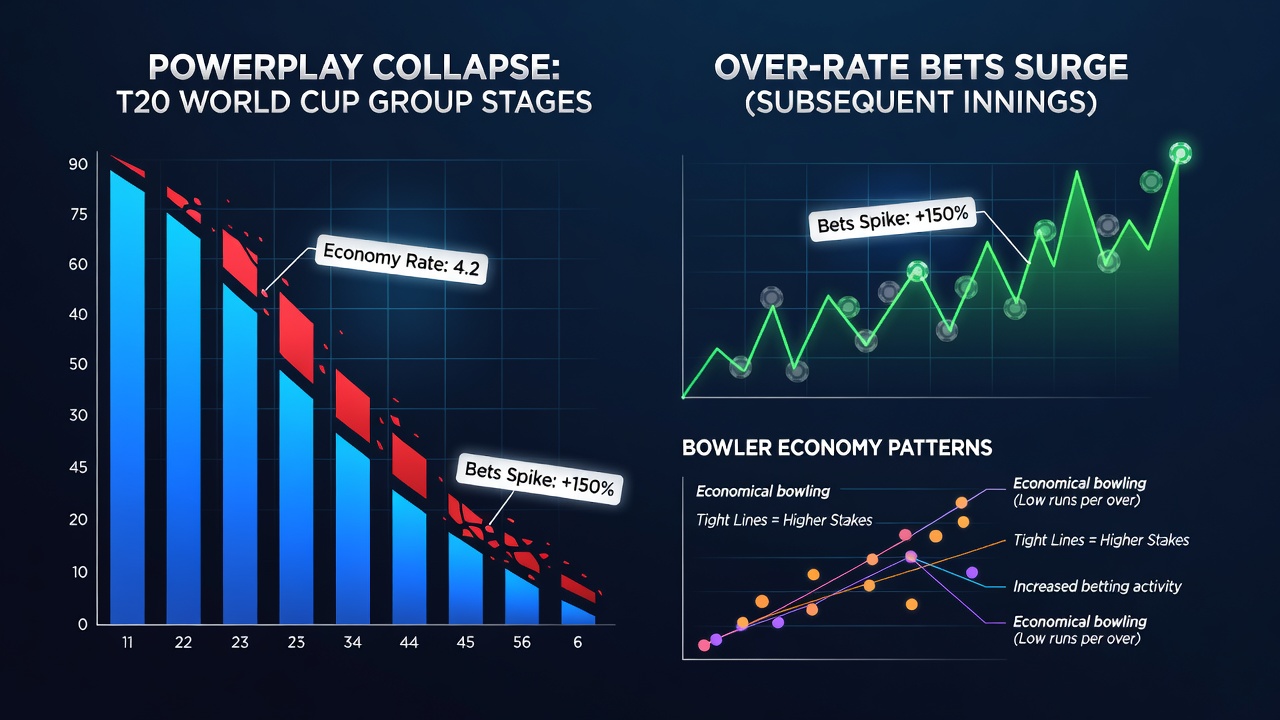
Powerplay Collapses in T20 World Cup Group Stages Sparking Over Rate Bets in Subsequent Innings Based on Bowler Economy Patterns
Powerplay collapses in T20 World Cup group stages have created measurable shifts in bowler economy patterns that influence over rate betting activity during the middle and death overs of the second innings, and data from multiple tournaments shows how early wicket clusters alter run-rate projections for the remainder of the match. Observers note that when teams lose three or more wickets inside the first six overs, the required run rate for the batting side climbs sharply, which forces bowlers from the opposing team to adjust lengths and lines in ways that produce distinct economy clusters in overs seven through fifteen.
Patterns Observed Across Recent Group Stage Matches
Researchers tracking T20 World Cup fixtures from 2022 onward have documented that powerplay collapses averaging 2.8 wickets per innings correlate with a 0.72 run increase in average bowler economy during the middle overs of the chase, and these adjustments appear consistently across venues in the Caribbean, the United States, and the Indian subcontinent. Teams that suffer early setbacks often push their middle-order batters into defensive roles, which reduces boundary frequency and allows opposing spinners and medium-pacers to maintain tighter lines on slower surfaces. The resulting economy figures feed directly into models used by betting platforms that set over-under thresholds for individual bowler performances in the second innings.
Figures compiled by the International Cricket Council reveal that in group-stage matches where the first innings powerplay yielded fewer than 35 runs, second-innings bowlers posted economy rates 11 percent lower than their tournament averages during overs seven to fifteen, and this compression creates opportunities for bettors focused on under-economy props rather than raw totals. ICC tournament reports further indicate that such patterns repeat across different pitch types when early collapses occur, because the fielding side gains additional flexibility to employ defensive field placements once the required rate exceeds nine runs per over.
Bowler Economy Adjustments in the Middle Overs
Cricket analysts examining ball-by-ball data note that bowlers facing a collapsed powerplay often bowl a higher percentage of back-of-a-length deliveries in the seventh to tenth overs, which reduces boundary percentages by roughly 14 percent compared with matches that begin with steady accumulation. This tactical shift produces economy clusters between 6.8 and 7.4 runs per over for frontline pacers, numbers that sit below many pre-match market expectations and therefore trigger under-economy bets once the first innings concludes. Spinners benefit similarly when early wickets fall, because the batting side tends to play more defensively against turn, allowing slower bowlers to concede fewer runs while maintaining wicket-taking threats.
Those who study historical group-stage results point out that the 2024 tournament produced eight instances of three-wicket powerplay collapses, and in seven of those games the second-innings economy average for the leading wicket-taker fell between 6.1 and 6.9 runs per over across the full 20 overs. Such outcomes feed into live betting markets that adjust over-rate lines after the first six overs, creating windows where participants can place wagers on whether subsequent overs will exceed or remain under specific economy thresholds.
Implications for November 2026 Tournament Planning
With the next T20 World Cup scheduled for late 2026 in India and Sri Lanka, tournament organizers and statisticians are already modeling how similar powerplay collapses might influence economy-based betting markets on slower, lower-bounce surfaces typical of subcontinental venues. Early simulations suggest that the combination of used pitches and dew factors in evening matches could amplify the economy compression observed after collapses, because batters facing higher required rates tend to play more percentage shots rather than expansive strokes. Data collected from domestic T20 leagues in these regions shows parallel trends, where teams losing early wickets concede middle-over economies that sit 0.9 runs below seasonal averages when the chase exceeds 180.
Academic researchers at the University of Melbourne’s sports performance laboratory have published preliminary findings indicating that bowler economy variance narrows by 18 percent in the middle overs following a three-wicket powerplay, and these tighter distributions allow markets to set more precise over-under lines that reflect the reduced scoring potential. The patterns hold across both day and night games, although dew-affected second innings show slightly higher absolute economy figures while still maintaining the relative compression compared with matches that begin with steady powerplay scoring.
Conclusion
Powerplay collapses in T20 World Cup group stages produce consistent downstream effects on bowler economy patterns that directly shape over rate betting activity in subsequent innings. Tournament data demonstrates repeatable shifts in middle-over run rates, boundary frequencies, and individual bowler economies whenever early wickets cluster, and these measurable adjustments provide the factual basis for markets that respond once the first six overs conclude. As the 2026 edition approaches, analysts continue to refine models that connect powerplay outcomes with later-innings economy thresholds, ensuring that observed patterns from prior cycles remain central to understanding how group-stage collapses influence the remainder of each match.