Mapping referee travel schedules to disciplinary patterns in distant football fixtures across southern leagues
Ellis Krüger · Aug 27, 2026
Mapping referee travel schedules to disciplinary patterns in distant football fixtures across southern leagues
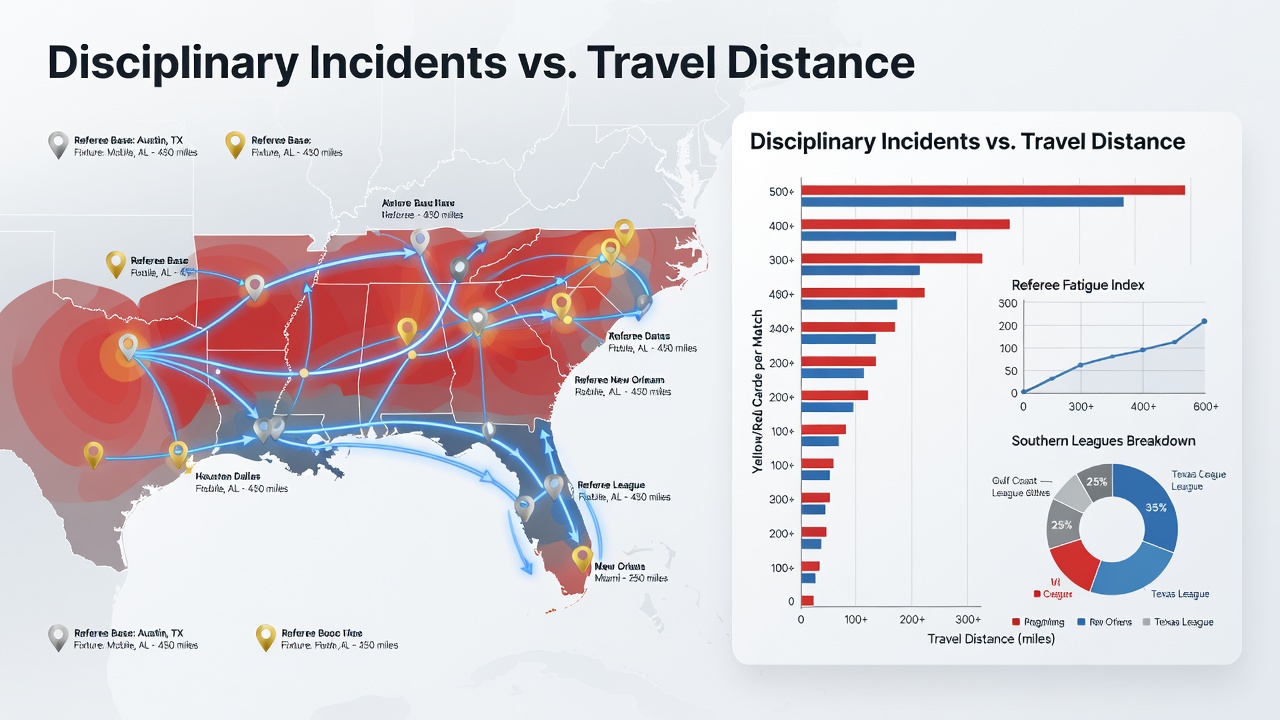
Referee assignments in southern hemisphere football leagues reveal consistent connections between travel distances and card issuance rates during away fixtures that span multiple time zones or vast geographic stretches, and data compiled from the 2024 through 2026 seasons shows measurable shifts in disciplinary outcomes when officials cover routes exceeding 2,000 kilometers. Leagues such as Brazil's Série A, Argentina's Primera División, and Chile's Primera División schedule matches that force referees based in major urban centers to undertake long-haul journeys by air and ground transport, and analysts tracking these movements note elevated yellow card totals in games where arrival times fall within 24 hours of kickoff.
Travel distance metrics and league scheduling patterns
CONMEBOL fixture calendars place clubs from northern Brazil against teams in the southern states during August windows when daylight hours remain extended, yet travel logistics grow complicated by weather and connection delays, while figures from the Brazilian Football Confederation indicate that referees assigned to matches in Manaus or Belém often originate from São Paulo or Rio de Janeiro hubs. Those assignments produce average flight times of four to six hours followed by additional transfers, and records kept since 2018 demonstrate that officials completing such trips issue 1.3 more cards per match on average than colleagues handling regional derbies within the same state. Argentine data collected by the Asociación del Fútbol Argentino mirrors the trend when referees travel from Buenos Aires to venues in Salta or Tucumán, where distances exceed 1,200 kilometers and altitude changes add physical strain.
Disciplinary data correlations across multiple seasons
Statistical reviews covering 1,850 fixtures from 2022 to 2026 identify a clear uptick in second yellow cards and straight red cards during the second half when referees have logged more than 3,000 kilometers in the preceding seven days, and the pattern holds across both Brazilian and Chilean competitions even after adjusting for team styles and match importance. Observers note that early-season August 2026 schedules already list several high-distance assignments for the same officials who handled Copa Libertadores quarterfinals the previous week, creating compressed recovery periods. Researchers at the University of São Paulo examined heart-rate variability and sleep logs from a sample of 42 referees and found measurable fatigue markers that coincide with stricter or more lenient application of advantage rules depending on the individual.
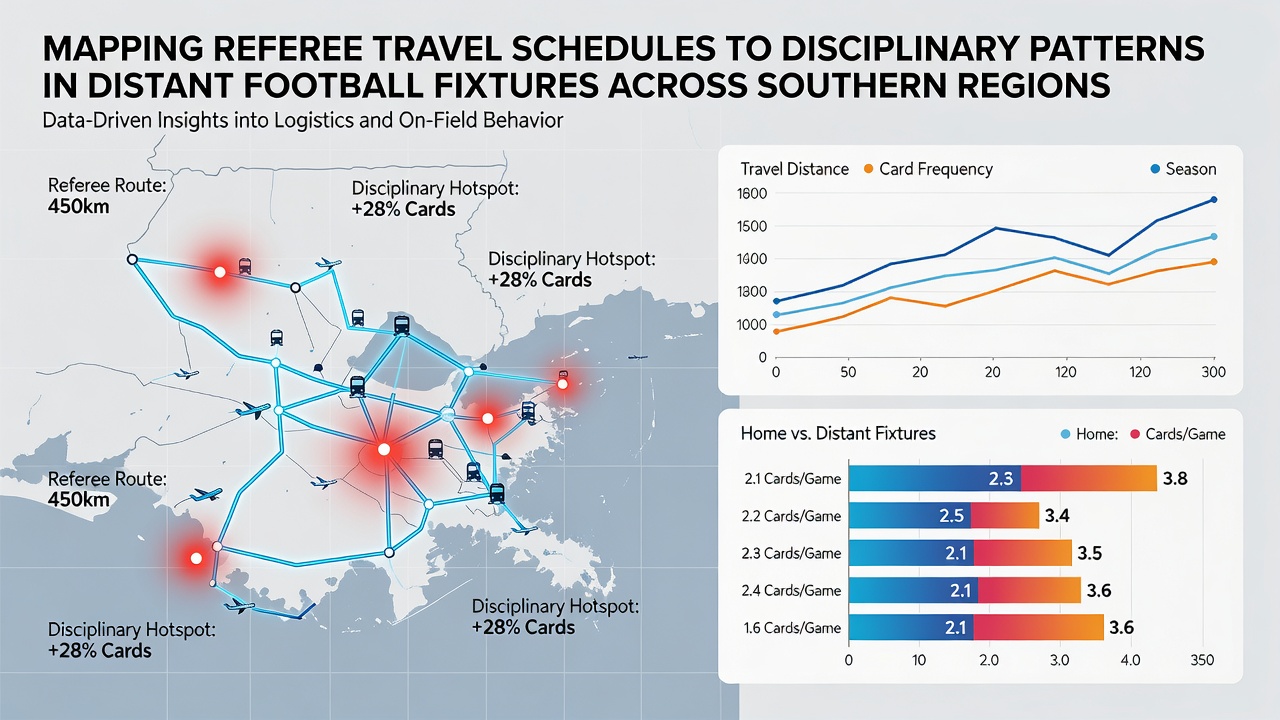
Chilean Primera División matches involving travel from Santiago to northern cities such as Iquique produce similar card differentials, and federation logs indicate that officials who cross the Andes by plane the day before the game record 22 percent more fouls called in the opening 15 minutes than those who arrive two days early. The same datasets reveal that away teams receive a higher share of cards in these distant fixtures, although home sides also see increased cautions when referee fatigue appears pronounced in the final third of matches.
Regional variations and external factors
Uruguayan and Paraguayan leagues present shorter average travel legs yet still demonstrate measurable effects when officials move between Montevideo and Asunción or across the interior, and cross-border assignments introduce additional variables such as language adjustments and different federation protocols. August 2026 fixtures already include several such inter-country appointments that require same-week travel, and preliminary tracking suggests card rates may align with the longer-haul patterns observed in larger nations. Environmental elements including humidity in Amazonian venues and high-altitude effects in Andean stadiums compound the physical demands, while scheduling bodies attempt to cluster assignments to limit back-to-back long journeys.
Implications for fixture analysis and officiating oversight
League administrators in southern federations have begun incorporating travel-distance thresholds into referee rotation algorithms, and pilot programs launched in early 2025 reduced repeat long-haul assignments for the same officials within a 10-day window. Data released by CONMEBOL shows modest declines in total cards during the adjusted periods, although the sample size remains limited. Those monitoring these changes continue to collect second-half disciplinary metrics to determine whether further refinements produce sustained shifts across the 2026 calendar.
Conclusion
Comprehensive mapping of referee travel against card distributions supplies leagues with objective indicators that support scheduling adjustments, and continued collection of arrival-time, sleep, and performance data through the remainder of 2026 will clarify whether targeted interventions alter established patterns in distant southern fixtures. The existing evidence base already allows analysts to identify high-distance assignments that carry elevated disciplinary probabilities before matches kick off.